
Jump to:
Many people choose a Japanese knife based solely on blade shape or steel type. They often overlook the finish. However, the knife finish plays a big role in how a knife performs. A good finish can reduce drag, keep food from sticking, improve corrosion resistance, and even boost the knife’s lifespan.
Let's explore different Japanese knife finishes so you can choose a blade that fits your cooking style and feels great in daily use.
Understanding What a Blade Finish Actually Does
Understand what a blade finish does before you choose a Japanese knife. The finish adds the final Japanese knife texture or treatment to the knife blade surface. It shapes how smoothly the knife cuts, how easily food slides off, and how long the blade stays in good condition.
Here’s why it matters:
- Friction control: A smoother or textured surface helps the blade glide through food with less effort.
- Food release: Some finishes keep food from sticking to the blade as you cut.
- Corrosion resistance: Certain finishes protect the steel from moisture and acids.
- Drag reduction: A polished or treated blade moves through ingredients with less resistance.
- Aesthetics: Each finish brings its own look, from rustic to sleek and modern.
Types of Japanese Knife Blade Finishes
Japanese knives feature a range of traditional finishes, each created with a specific purpose in mind. Some are designed to enhance cutting performance, while others highlight the craft and skill of the maker. For a deeper look at craftsmanship and blade styles, you can also take a look at these Japanese knives.
1) Kurouchi Finish

A kurouchi knife finish keeps the dark forge scale on the upper blade. This finish gives the knife a rustic look that many cooks enjoy. However, some are crafted to do both. Moreover, its blacksmith finish makes it ideal for cooks who enjoy old-world charm and low-maintenance performance.
What makes it great?
- Offers natural corrosion resistance
- Has a traditional, earthy character
- Shows the blacksmith’s original work
2) Migaki / Polished Finish

A migaki finish creates a smooth, clean, modern-looking surface. Some blades are only slightly polished, while others are mirror-bright. This polished knife finish is perfect for professional kitchen tasks, where clean cuts are key every time.
What makes it great?
- Low friction for smooth slicing
- Easy to clean
- Looks sleek and refined
3) Nashiji (Pear-Skin) Finish

The nashiji knife finish has a textured surface that looks like pear skin. It adds a pattern to the blade without feeling rough. This textured knife finish, like Ginsan Nashiji, is perfect for chopping vegetables that often stick to smooth blades.
Why do cooks enjoy it?
- Helps with food release
- Provides texture without looking too bold
- Balances rustic and modern styles
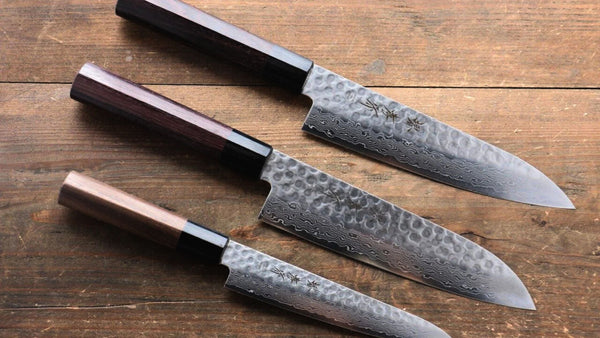
4) Tsuchime (Hammered) Finish

A tsuchime finish features hand-hammered dimples on the blade. These dimples create tiny air pockets between the knife and the food. This hammered knife finish is ideal for slicing ingredients like potatoes, zucchini, or fish that often stick.
What makes it great?
- Excellent food release
- Distinct handmade aesthetic
- Helps ingredients fall away from the blade
5) Damascus Finish

A Damascus knife pattern is made by layering and folding steel together. It exhibits wavy lines upon polishing and etching. This layered steel finish is perfect if you’re a collector or are searching for a knife that works well and looks like a piece of art.
What makes it special?
- Stunning visual pattern
- Added strength thanks to layered construction
- Symbol of premium craftsmanship
6) Satin Finish

A satin knife finish has linear brush marks running along the blade. It strikes a balance between polished and matte. Many cooks choose satin finishes for everyday use because they stay clean and elegant. It’s also the type of finish commonly seen on butter knives, where the smooth, brushed texture helps spread butter or soft cheeses easily without sticking.
Why do people choose it?
- Reduces glare
- Hides light scratches
- Feels smooth without being shiny
Explore our best Japanese kitchen knives collection, and discover premium Japanese knives that perfectly suit your cooking needs.
Which Knife Finish Should You Choose?

Each blade finish has its individual strengths. So, choosing the best Japanese knife finish depends on how you cook and the qualities you value most.
-
Tsuchime or Nashiji For Minimal Food Sticking: These finishes add tiny air pockets or micro-textures on the blade surface. The dimples in tsuchime or the soft pattern in nashiji knives like Kazoku Ginsan Nashiji help food slide off easily. They are great when choosing a knife finish for cutting sticky ingredients like potatoes, zucchini, or fish.
-
Kurouchi or Satin For Low Maintenance: Kurouchi is kept in its own forge scale, which adds to the natural protection against rust. Minor scratches and fingerprints can be easily wiped away from the satin finish blade, making it easy to maintain its neat look. These are ideal for home cooks looking for knives that will last without needing constant polishing.
-
Migaki or Satin for Professional Kitchens: Migaki gives you a smooth, low-friction surface to ensure clean cuts. Satin also cuts smoothly while reducing glare. Both finishes look and feel professional, which is what chefs want.
-
Damascus or Kurouchi For Collectors or Gifting: Damascus displays layered steel patterns that produce a stunning artwork. Kurouchi shows the contrast between traditional and modern blacksmithing, creating a beautiful and yet darker forged appearance on the blade face. Both make great gifts or collector’s items.
- Satin or Nashiji if You’re Unsure: A satin or nashiji finish offers great balance for the vast majority of home cooks. They combine performance, ease of use, and a graceful look. This makes them great for everyday cooking.
Japanese Knifemakers' Techniques for Crafting These Finishes 
The process of creating these finishes is done by Japanese bladesmiths using both old and new methods. Each Japanese knife crafting method tends to emphasize different qualities in the steel, such as how the knife looks and feels and performs in use in the kitchen.
Hammering
This is how a tsuchime finish is made. The bladesmith hammers the blade, creating small dimples. Each dimple is placed one by one to increase food-release properties and adds a handmade appearance.
Polishing by hand
Artisans polish the blade using stones or special wheels to achieve a migaki finish. This process can take hours. The goal is to make a shiny surface that lets the knife glide easily through food.
Acid etching for Damascus
Damascus designs influence how the blade looks when it is dipped in acid. The acid responds to each layer of steel differently, creating patterns that may look like waves, swirls, or feathers. This blade finish technique shows off the knife’s layered construction.
Forge-scale retention
A kurouchi finish is formed when the blacksmith leaves behind the dark forge scale on the top half of the blade. That preserves the steel and creates a classic, handmade look to the knife.
Other Things To Know About Japanese Knife Finishes
Do knife finishes affect sharpness?
Not directly. Sharpness is from the edge, while a finish influences the way a blade moves through food and how easily it slides off.
Which finish is best for beginners?
Go for a satin or nashiji finish. Both require relatively little maintenance, seem clean, and encourage good food release.
Is a Damascus knife only for looks?
No, although the pattern of alternating laminations looks dreamy, it is the layering that provides strength. Thus, a lot of people select Damascus largely for its craft.
Does a polished finish scratch easily?
Light scratching can be a little more obvious on highly polished blades, but with careful use and storage, they look great.
What finish stays cleanest the longest?
Satin and kurouchi finishes hide marks well and require less polishing.
Which finish works best for sticky foods like potatoes?
A hammered (tsuchime) or nashiji finish. Both help with food release.
Does the finish impact rust resistance?
Yes. Kurouchi provides a protective layer, while polished finishes have less texture where moisture can settle.
Can I restore a damaged finish?
While some finishes, such as satin, can be maintained at home with the right tools. Others, such as Damascus or kurouchi, will need a professional restorer to prevent damage.
Key Takeaways
Japanese knife finishes significantly influence how a blade performs in daily cooking. They affect glide, food release, corrosion resistance, and how easily the knife moves through ingredients.
Kurouchi and satin are low-maintenance options suited for home cooks, while nashiji and tsuchime improve food release, especially with sticky foods. Migaki and satin finishes provide smooth, clean cuts preferred in professional kitchens, and Damascus or kurouchi styles appeal to collectors for their craftsmanship.
Understanding both Japanese knife types and blade finishes helps you choose a knife that feels comfortable, performs reliably, and suits the way you cook. To keep your blades in top condition, be sure to read our detailed guide on how to maintain Japanese knives.


0 comments