

Jump to:
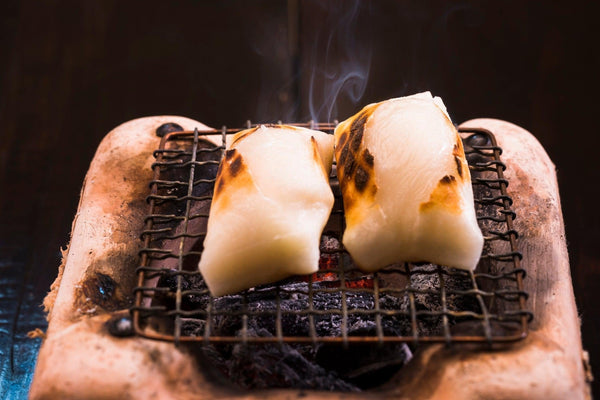
Mochi is really popular in the West these days, but have you heard of kirimochi? Kirimochi (sometimes two words, kiri mochi) is popular in Japanese households for its flexibility. It can be used in many different dishes, the portions are controlled (each piece is individually wrapped), it has a long shelf life and it tastes great! This article will talk about what kirimochi is, a bit about its history, how to prepare it, and more.
What Is Kirimochi?

Well, to understand kirimochi, we first need to understand mochi. Mochi (some translate it as a Japanese “rice cake”) is traditionally made by pounding rice with a mallet until it gets that gooey, almost gelatinous texture it’s known for. Chances are you’ve tried it by now because it’s pretty easy to find in the West. And although people overseas associate it with sweet foods like ice cream mochi and sweet mochi snacks, it’s actually eaten as a savory food in Japan, as well.
Now about the kirimochi — yes, it is indeed a form of mochi. And what makes it unique is that it’s cut up into pieces (the kiri in kirmochi actually means “cut”) and packaged in dry form. Because it’s dried and packaged, it has a longer shelf life than fresh mochi. It’s also easier to make just as much as you need, because each slice is separated into individually wrapped portions (sorry for all the plastic, environment — but at least this one makes sense).
The Ingredients Of Kirimochi

Kirimochi, just like regular mochi, is made from one simple ingredient: glutinous rice (called mochigome in Japanese). This is not the rice that’s used in sushi — that’s called uruchimai. Both rices are similar, but glutinous rice is more often used in sweeter foods. Uruchimai is eaten as regular rice served with daily meals and most cooking. Fun fact: glutinous rice doesn’t contain gluten.
The History Of Kirimochi
To know the history of kirimochi, we first need to know a bit about the history of mochi. The earliest written account we have of mochi existing in Japan is from the Nara period (710-784) in an ancient book called Bungo no Kuni Fudoki. But most people think that mochi came to Japan even earlier than that — from Southeast Asia — around the same time as rice cultivation techniques were incorporated into Japanese farming.
Apparently, mochi used to be made with a more reddish-colored rice. The round rice cakes of that day were likely much larger than they are now, as well. On a spiritual level, Japanese people associated mochi with good luck, long life, and a connection with the gods — especially around the New Year. More on that later.
So, what about the history of kirimochi? Well, it came along in the 20th century. In the early 1900s mochi was already being mass-produced and sold in Japan, but it was not yet what we know as kirimochi. It was prepackaged, but it had a problem with molding easily. Fortunately, a new packaging and sterilization method was developed that prevented this molding in 1964.
A company called Sato Foods thought they could use this method to make and sell their mochi — and they did. It was a success, and was the beginning of what would be called “Sato no Kirimochi.” It evolved in shape and packaging over time, but it became perhaps the most popular cut and dried mochi on the market.
People in Japan eat mochi (including kirimochi) all year long, but it’s eaten a lot more around New Year’s. Why is that? According to the Kyoto Confectionery and Bakery Technical College, eating mochi at New Year’s is a way to bring prosperity to you and your family for the year — kind of like American Southerners eating greens and black-eyed peas. One particular type of mochi is particular to the New Year’s holiday in Japan, though — kagami mochi. It started as an offering to a god (Toshigami) way back when (but in modern Japanese culture who can say where the tradition begins and the spirituality ends). Kagami mochi is made by placing two rice cakes (mochi) on top of one another. The cake on the bottom is wider than the one on top. Some call it a “mirror” rice cake. There are decorations on kagami mochi, too — often a small bitter orange (called daidai) on top along with leaves, small fans or whatever is popular locally. This type of mochi gets really dry (on purpose), because after the New Years celebrations you break or crack it open. This is to avoid cutting it (because using a knife could “cut” spiritual connections with the god of the New Year). One of the great things about kirimochi is how easy it is to make. You can toast it in a toaster oven, grill it in a pan, boil it in water, or even microwave it. Here are the most popular ways to prepare it. Kirimochi can be eaten in so many different ways and in so many different dishes — both sweet and savory. Here are a few things you might want to try with your mochi. There are tons of dishes you can make with kirimochi. You can make traditional meals like oden and sukiyaki or get creative with dishes like mochi gratin or mochi gyoza. There are some great recipes out there using mochi, and some of them are right here on Japanese Taste! Here are a few you might want to try. Note: Even if “kirimochi” isn’t listed directly in the recipe, you can use it where mochi is called for (kirimochi is mochi!). You can buy kirimochi in grocery stores in Japan, or you can buy it online right here at Japanese Taste. In Japanese grocery stores it will usually be in the rice section. You might even find it at convenience stores (especially around the New Year). Storing kirimochi is easy — just put it in the cabinet! It’s in a bag and it has a long shelf life, so you really don’t have to worry about storing it in any special way. After you cook it, though, that varies. According to Eat Delights, mochi (by itself — not in any dish) lasts 24 hours without refrigeration after cooking. It will last up to one week in the fridge after cooking, and even longer in the freezer. The Significance Of Mochi In Japanese Culture

How To Cook Kirimochi

Ingredients That Go Well With Kirimochi

Dishes You Can Use Kirimochi In

Where To Buy Kirimochi

How to Store It


0 comments